


Humans are the only mammals that walk with their backs upright.In this regard, the spine is subject to great loads.On the one hand, the predominance of a sedentary lifestyle, on the other hand, the physical activity associated with lifting heavy objects, sudden movements, and even taking public transportation; all these factors contribute to the development of osteochondrosis, a common disease.Furthermore, this disease is most commonly found in the working population.
What is osteochondrosis, its types and stages
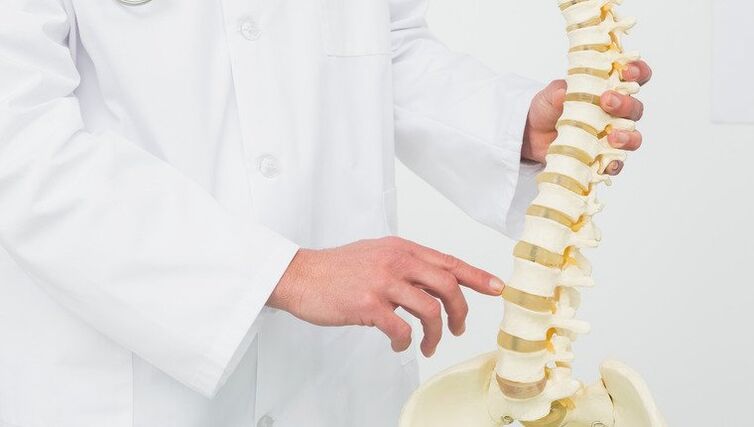
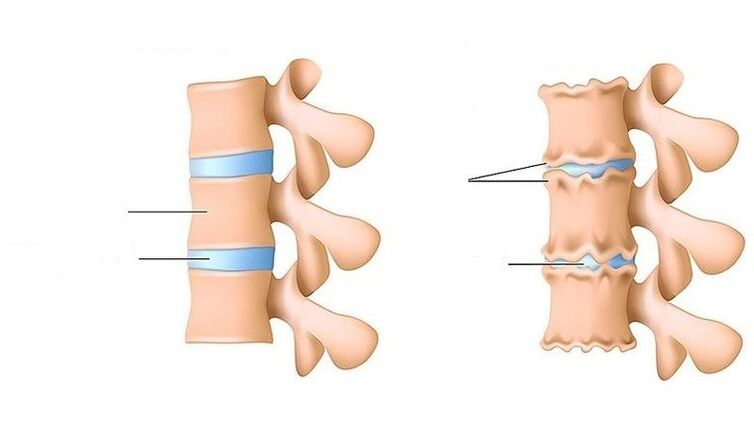
Osteochondrosis is a process in which the elasticity of the intervertebral discs is compromised.Under the influence of adverse factors, the discs can lose fluid and become more compact and less flexible.This happens due to the load on the spine during movement: the pressure on the disc axis squeezes fluid out of the disc.During a night's rest, the spine should fully recover, but this does not happen with a sedentary lifestyle because the muscles and ligaments gradually lose their ability to stretch and thus fully recover.
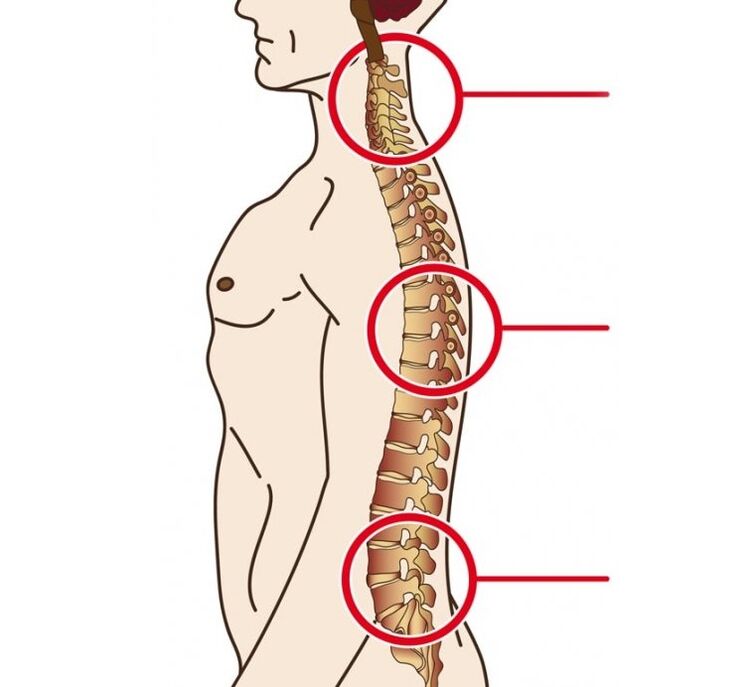
cervical osteochondrosis
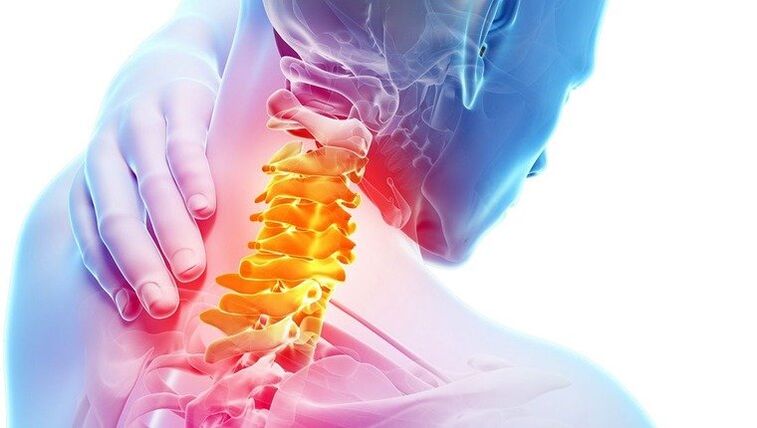
This type of osteochondrosis is considered the most insidious.The vertebrae that make up the neck are very close to each other.Even a slight deformation of one of these can have serious consequences: headaches, stress surges, heartache.If the condition progresses, numbness of the limbs, tinnitus, difficulty breathing, vision problems, etc. may occur.Some symptoms can be easily confused with recurring headaches or fatigue, but if symptoms recur frequently, you should see your doctor as soon as possible to ensure a correct diagnosis is made promptly.
Thoracic osteochondrosis
The main symptom of this type is chest pain.Most commonly it occurs on one side and is defined as pain or tingling.A typical feature is the association with movement, and the pain increases with static loading.There are two types of chest pain: acute but brief attacks, and mild but longer-lasting pain.If you seek medical treatment promptly, the disease can be cured without surgery.
Lumbar osteochondrosis
This is the most common type of osteochondrosis.It affects men and women with equal frequency.Acute pain occurs at the transition from the lumbar area to the sacral area.The main problem is a loss of cartilage tissue, resulting in a decrease in the distance between the vertebrae, which is a direct pathway to the formation of an intervertebral hernia.Pain can occur for a variety of reasons: compression of nerve endings, narrowing of veins, compression of the sciatic nerve.The exact cause will be determined by your doctor.
Damage to two or more parts of the spine
Osteochondrosis, which affects the entire spine or several areas, can worsen a person's general condition.The likelihood of a hernia increases many times.Persistent pain makes it impossible to live a normal lifestyle.It is necessary to start treating the disease as soon as possible before the process of changes in cartilage tissue becomes irreversible.
There are four stages in the development of the disease:
- The initial manifestation is spinal instability and mild, short-lived pain;
- In the second stage, the vertebrae shift and the distance between them shortens;
- In the third stage, the intervertebral disc may be severely deformed until a hernia forms;
- In the final stages, patients will experience stiffness of movement and possibly severe pain.
Symptoms and signs
The onset of the disease is difficult to track because there are no obvious symptoms.Sometimes, your back can become numb and your legs can feel pins and needles from sitting or lying in one position for too long.All these unpleasant feelings will soon pass and you just need to move or rub the stiff legs.Acute pain is as unexpected as ever: a person stumbles, turns suddenly, and then develops a pain syndrome that scares even thinking about the next step.Pressing on disturbing areas can cause pain, limited movement, and muscle tension.A protective spasm occurs; in this way, the body protects the painful area from further movement.This usually lasts about 24 hours until the muscles can relax.
Therefore, symptoms of osteochondrosis include discomfort in various parts of the body, along with pain.The pain can be concentrated in the neck, shoulders, back, and chest.Symptoms described may include headache, dizziness, fatigue, heartache and loss of sensitivity in the extremities.Depending on the localization of the pain syndrome, the doctor will be able to determine where changes in the spine begin.
Development reasons
Causes of the disease include factors that interfere with proper nutrition of the disc and prevent it from recovering:
- Spending long periods of time in postures that adversely affect spinal function (mainly sitting);
- Injury; this applies especially to people who perform activities that place heavy loads on the spine (e.g. weightlifting);
- Jobs associated with long-term static loads (e.g. assembly line workers, hairdressers, etc.); with such jobs, muscle congestion and poor blood circulation can be observed.
Since the main cause of osteochondrosis is uneven load distribution on the spine, other factors that may seem unimportant at first glance can also affect human health.Carrying bags with only one hand, the habit of bending over, hunching over, sleeping on a soft feather bed, sleeping with a bent neck (high pillow), uncomfortable (albeit stylish) shoes - all these are also prerequisites for back problems.Unhealthy lifestyle, obesity and adolescent scoliosis can further worsen the condition.
Risk factors include:
- Tall people because their back muscles are underdeveloped;
- Everyone with a sedentary lifestyle;
- Those who are forced to lift weights by profession;
- Truck drivers experience prolonged vibration;
- former athlete;
- People who have similar cases in their family;
- Pregnant and menopausal women;
- the elderly;
- smoker.
How to diagnose disease
If the patient notices the above symptoms, then he should visit his local doctor who will refer the patient to a neurologist.To clarify the diagnosis, the neurologist may refer the patient to a more specialized specialist - a neurologist (a doctor who specializes in treating spinal conditions).A good chiropractor can also detect disease by palpating the back.If a patient is suspected of having a hernia, a trauma surgeon is essential.
Instrumental methods are also used to make diagnoses:
- X-rays of the spine;
- Myelogram (this is a picture not only of bones but also of nerve endings and other structures);
- Reflexology exams (the infamous hammer of neurologists);
- computed tomography;
- MRI (the most accurate and safest diagnostic method);
- Magnetic resonance imaging (an indispensable method for disc pathology).
Doctors also prescribe routine check-ups for patients.
During general blood tests, attention should be paid to white blood cell count and erythrocyte sedimentation rate.Increased values indicate the presence of inflammatory processes in the body.Low hemoglobin levels indicate a lack of protein food, which directly affects the development of degenerative processes.
A typical urine test will show the percentage of mineral salts in the body.An increase in the ratio indicates that the correct balance of nutrients in the food is disrupted.
Elevated blood sugar also indicates that the patient is not eating properly.Additionally, this can be the first symptom of diabetes, which can lead to complications in all organs of the body.
Analysis of cholesterol levels in the blood is also very important as it can show the condition of the blood vessels.
Treatment of osteochondrosis
In the initial stages of the disease, small amounts of medication are used.Medications are needed to relieve the patient's condition, reduce inflammation, and improve metabolism.If these procedures are not enough, doctors prescribe blockade therapy, or injections, which are a fairly effective remedy.Medications taken by older adults do not accumulate in the body.
Physical therapy can be a great complement to medication.Physical therapy methods include: ultrasound, use of magnetic fields, low-frequency current, laser therapy, etc.The principle of action is to expand blood vessels and increase blood circulation.In this way, an analgesic effect is achieved and a compromised immune response is normalized.
Physical therapy also has beneficial effects on the spine.A properly chosen set of exercises can get even the most neglected patients back on their feet.Under the influence of physical activity, not only the damaged functions are restored, but the patient's overall mental state is also improved.The very prescription of this therapy gives patients confidence that they can return to a mature lifestyle.Simulators such as special treatment boards have proven to be excellent.This is an inexpensive and effective way to restore spinal function.
The action of massage is based on complex metabolic processes.Thanks to it, blood and lymph circulation in the affected area is improved, thus increasing metabolism, relaxing muscle tone, joint mobility and improving skin condition.Massage can relieve pain, fatigue and improve physical condition.
Manual therapy can only be performed by professionals, as illiterate specialists may harm the patient.This therapy is a series of measures that can radically improve a person's condition.A good specialist can free the patient from dysfunction and restore the ability to fully use the affected organ.Impact is carried out by pressure, twisting, pushing, jerking, etc.
Spinal traction can provide good results.It can be underwater or dry.Used to increase space between disks.Underwater, as the name suggests, is done underwater and dried on a table with special equipment.The stretch can be vertical or horizontal, depending on the position of the body.
Ignore the complications of disease
It is believed that everyone suffers from rickets.But this is no reason to ignore the issue.It's not a completely harmless diagnosis.In particularly severe cases, the disease can cause disability.
If treatment is ignored, the following complications may occur:
- hernia;
- Herniation (initial change in the disc);
- Kyphosis (hump on the back);
- Radiculitis;
- salt deposits;
- spinal cord stroke;
- circulatory system diseases;
- Leg paralysis
Untreated cervical osteochondrosis can cause headaches, dizziness, and insomnia.Chest becomes intercostal neuralgia.The lumbar spine can lead to sciatic nerve inflammation, genitourinary system dysfunction and other consequences.The main condition for the treatment of osteochondrosis is staging. Only continuous targeted efforts can achieve good results.
disease prevention
Prevention plays an important role in maintaining a healthy spine.The first step is to reduce the risk of workplace injuries.This applies to both dynamic and static loads.If this possibility exists, you should move to another work location when you first experience back pain.Otherwise, you need to take the necessary measures: constantly change your body posture, optimize your workplace, do gymnastics or at least some exercises.Yoga classes can play a special role.This ancient Indian system of postures, known as asanas, can help remove all tightness from the body and relax and lengthen the spine.
Proper weight lifting exercises are of no small importance in prevention.
Everyone who protects their back must follow a few rules:
- Do not lift weights with open arms; the correct approach is to sit down, press the weight on your chest, and stand with your back straight;
- You cannot carry a heavy object with one hand; it is correct to divide its weight into two roughly equal parts;
- Even if the luggage weight is small, you need to stop periodically to rest your hands;
- The spine must be prepared to bear the load; regularly performing a series of back-strengthening exercises known as muscle corseting can help with this.
If regular exercise isn't possible, substitute more familiar walking.It is recommended to walk at least 8,000 steps a day, but be sure to maintain good posture and combine the number of steps with correct breathing; when walking, you can try different walking methods: standing on tiptoes, landing with heels, raising your legs high, and racing.If you don't have time to do so, even a short but energetic walk to work and back can be beneficial.
Swimming combines the opportunity to relax your vertebrae with the feeling of physical movement.In water, Archimedes' law applies, which reduces the body's weight, so the muscles relax and the spine stretches.In addition, swimming can keep you in good physical condition.
Running can also prevent disease.It is important to remember that both lack of physical activity and excessive physical activity are harmful to the spine.You need to carefully monitor your condition and avoid pain.
If there are signs of inflammation, an applicator can help.When the needle touches the patient's skin, the nerve endings are stimulated, blood vessels dilate, blood circulation improves, and pain symptoms are reduced.Longer exposure (up to 40 minutes) causes muscle relaxation.
A proper diet is one of the most effective prevention methods.
It should pursue several goals:
- Fight excess weight;
- required amounts of vitamins and minerals;
- Prevent body dehydration;
- Slow down destructive processes.
In order for the diet to achieve its goals, foods must be low in calories and include dairy products, fish, eggs, herbs and vegetable oils.Doctors recommend eating dishes based on broth: soup, borscht, aspic, aspic.In fact, such foods contain protective agents that protect cartilage tissue.But older adults should be cautious about this diet because the fat contained in concentrated broth can clog blood vessels in the brain.
Spine health is in everyone's hands.If, at the first sign of pain, you start doing gymnastics, sign up to go to the swimming pool, and check your diet, you will not only slow down the destruction process of the vertebrae, but also improve the overall health of the body.If you don't have the time or inclination to live an active lifestyle, then you need to follow the basic safety rules described above in this article.